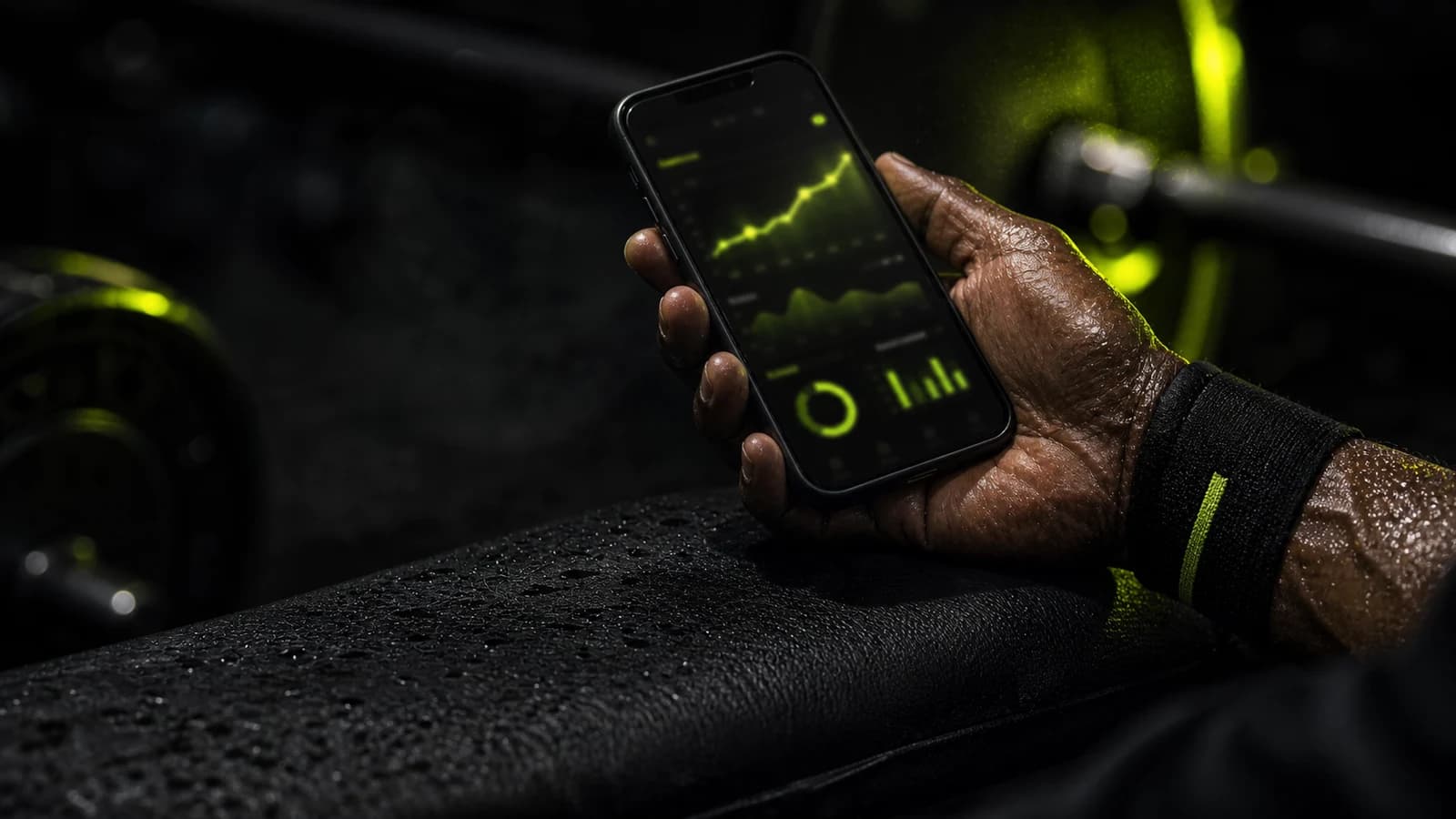
Zone 2 cardio for strength training is the biggest shift in how serious lifters think about conditioning in 2026 — and if you haven't added it yet, you're leaving recovery, volume capacity, and longevity on the table. Two to three Zone 2 sessions per week help you recover faster between heavy sets, build a bigger aerobic base, and support long-term health without touching your muscle or strength gains.
Here's everything you need to know.
What Is Zone 2 Cardio?
Zone 2 refers to aerobic exercise performed at 60–70% of your maximum heart rate. At this intensity you can hold a full conversation in complete sentences without gasping — harder than a casual walk, but nowhere near breathless.
For a 30-year-old, that lands roughly between 114 and 133 bpm. You're working steadily, but staying entirely aerobic: your body is burning fat, building mitochondria, and clearing lactate faster than it accumulates. No spike in cortisol, no glycogen crash.
This is the zone endurance athletes have built their aerobic infrastructure in for decades. For lifters, it's been a blind spot — until now.
Does Zone 2 Cardio Kill Your Gains?
This is the question every lifter asks first. The answer is: no — not if you dose it correctly.
The "interference effect" — where cardio blunts muscle and strength gains — is real, but it's almost exclusively driven by high-intensity work: HIIT, long-distance running, or exhaustive endurance sessions scheduled alongside heavy lifting. Low-intensity aerobic training like Zone 2 produces negligible interference with hypertrophy or strength when volume stays moderate.
A 2016 study found that a group combining lifting with cardio gained more upper-body muscle than a lifting-only group over 24 weeks. The mechanism: Zone 2 improves nutrient delivery to recovering tissue, accelerates clearance of metabolic byproducts, and keeps the aerobic system tuned — all without spiking the hormonal stress load that competes with growth.
The rule of thumb: HIIT competes with lifting. Zone 2 complements it.
How to Calculate Your Zone 2 Heart Rate
The quickest formula: (220 − age) × 0.60 for the lower bound, (220 − age) × 0.70 for the upper bound.
| Age | Zone 2 Range |
|---|---|
| 25 | 117–137 bpm |
| 30 | 114–133 bpm |
| 35 | 111–130 bpm |
| 40 | 108–126 bpm |
| 45 | 105–123 bpm |
A slightly more precise formula uses 208 − (0.7 × age) as your max HR. Either gets you close enough to start.
The talk test is your real-time check: if you can speak in full, unhurried sentences without pausing to breathe, you're in Zone 2. The moment you're choking out half-sentences, you've drifted into Zone 3 — ease off.
If you train with an Apple Watch or a Wear OS device, you can see your live heart rate during every session and course-correct in real time. Pair that with GainLogger to log your cardio sessions right alongside your lifts — so your Zone 2 work is part of the same training record, not floating in a separate app.
The Real Benefits of Zone 2 for Strength Athletes
Lifters who build their aerobic base with Zone 2 training consistently report changes that show up in their lifting, not just on a treadmill:
- Shorter effective rest periods. A stronger aerobic engine clears lactate faster between sets. You recover in 90 seconds what used to take 3 minutes.
- More volume per session. When you're not gassing out after the third working set of squats, quality work stacks up. More sets driven by a stronger engine, not by grinding through accumulated fatigue.
- Faster next-day recovery. A Zone 2 session the day after a hard leg day delivers nutrients to recovering tissue and helps flush metabolic waste — you walk in feeling better for your next session.
- Body composition over time. At Zone 2 intensity, fat is the dominant fuel. Over weeks, this improves body composition without aggressive caloric restriction or cortisol-spiking HIIT.
- Longevity. Zone 2 cardio improves mitochondrial density, insulin sensitivity, and cardiovascular health — the markers linked to healthspan, not just the next training block.
For strength-focused athletes, Zone 2 is the infrastructure that keeps heavy training sustainable for decades, not just seasons.
How to Add Zone 2 to Your Strength Program
Start with 2–3 sessions per week, 30–45 minutes each. That's enough stimulus to drive aerobic adaptation without competing with strength recovery.
Best modalities for lifters:
- Incline treadmill walking — easy on joints, HR stays controlled, zero skill requirement
- Stationary or assault bike — leg-friendly, hard to accidentally overshoot into Zone 3
- Rowing machine — full-body, excellent for upper-back recovery days
- Brisk outdoor walking — the most underrated option; 45 minutes gets the job done
When to schedule it:
- After an upper-body lifting session (legs are fresh; HR stays moderate)
- On dedicated rest days as active recovery
- Morning sessions if you lift evenings — keep at least 6 hours between
What to avoid: Zone 2 immediately before heavy squats or deadlifts. Pre-fatigued legs compromise technique, reduce loading capacity, and increase injury risk on the big movements.
A straightforward weekly layout might look like:
- Monday: Lower body strength
- Tuesday: Zone 2 — 30 min bike
- Wednesday: Upper body strength
- Thursday: Zone 2 — 40 min incline walk
- Friday: Full body or accessory work
- Saturday: Zone 2 — optional 30 min
- Sunday: Rest
Track It Like You Track Your Lifts
The friction with Zone 2 is that it feels too easy. So lifters skip it — convinced it can't be doing anything meaningful. It is. You just don't feel it the way you feel a heavy deadlift.
The solution is the same one that works for progressive overload: track it, log it, and let the streak do the work. When you can see three consecutive weeks of Zone 2 sessions building up inside your training log, the pattern becomes something you won't want to break.
Log your Zone 2 sessions alongside every lift in GainLogger. Your cardio and strength history live in the same place, the same timeline. After 8–12 weeks, the evidence shows up where it counts — shorter rest periods, less heavy breathing after demanding sets, and the ability to push more total volume per session.
Those are your PRs. Just a different kind.
Start This Week
Pick one 30-minute session — incline walk, easy bike, or row — and hold your heart rate in the 60–70% range. Do it twice next week. Hit it three times the week after.
The aerobic engine you build quietly in those sessions will power everything else you do in the gym. Watch your numbers climb — the lifts and the fitness underneath them.
Keep reading
- A hybrid training program that balances lifting and conditioning
- The 12-3-30 treadmill workout as a structured Zone 2 option
- A rowing machine workout plan for full-body Zone 2 sessions
Start tracking your workouts today
Available for free on iOS and Android.