Push Pull Legs Split: The 6-Day Plan for Maximum Muscle Growth
· Updated · 8 min · GainLogger
Push pull legs delivers maximum muscle growth by training every major muscle group twice each week through six focused gym sessions. Six training days, clean separation of movement patterns, no overlap between sessions.
Structure the split, build your template, and track progress set by set.
Key Takeaways
Key Takeaways
- Every major muscle hits two quality sessions per week. PPL's twice-weekly frequency drives more muscle growth than bro-split routines.
- Six days works for intermediate lifters with solid technique. Beginners should start with full-body or upper/lower splits first.
- Log every set against a template so previous weights and reps appear inline, removing guesswork from progressive overload.
What Is the Push Pull Legs Split?
PPL divides training into three movement patterns, each targeting specific muscle groups:
- Push days: chest, shoulders, triceps. Every movement where the load travels away from your body, including bench press, overhead press, dips, and cable flyes.
- Pull days: back, biceps, rear delts. Every movement where you pull weight toward you, including deadlift, barbell row, pull-up, and face pull.
- Leg days: quads, hamstrings, glutes, calves. Squat and hinge patterns, including back squat, Romanian deadlift, leg press, and calf raise.
The cycle runs twice in a six-day week. Each muscle gets two quality sessions with 48 to 72 hours to recover before working again. That frequency drives muscle growth.
Push Pull Legs for Beginners: Is PPL Right for You?
PPL sits at the intermediate level, not the beginner tier. You need three things before starting:
- At least three to six months of consistent gym training
- Solid technique on the main lifts (squat, deadlift, bench, row, overhead press)
- The schedule to attend the gym six days a week
Newer lifters should start with a full-body routine three days a week. That approach builds the same muscle with less total volume and faster recovery. Once the basics feel automatic and you want more training days, PPL becomes the natural next step.
Intermediate lifters who can commit to the schedule will see faster results than most other splits.
The Push Pull Legs Workout Schedule
The classic six-day structure follows a clean rolling pattern:
| Day | Training Focus |
|---|---|
| Monday | Push |
| Tuesday | Pull |
| Wednesday | Legs |
| Thursday | Push |
| Friday | Pull |
| Saturday | Legs |
| Sunday | Rest |
Start on whichever day works for your schedule. The cycle runs push, pull, legs, rest when needed, repeat. If life interrupts midweek, pick up where you left off.
Sample Push Day
- Barbell bench press: 4 × 5–8
- Incline dumbbell press: 3 × 8–12
- Overhead press (barbell or dumbbell): 3 × 8–10
- Lateral raises: 3 × 12–15
- Triceps cable pushdown: 3 × 10–12
Sample Pull Day
- Deadlift or rack pull: 3 × 4–6
- Barbell or cable row: 4 × 6–10
- Pull-up or lat pulldown: 3 × 8–10
- Face pull: 3 × 12–15
- Barbell or dumbbell curl: 3 × 10–12
Sample Leg Day
- Back squat: 4 × 5–8
- Romanian deadlift: 3 × 8–10
- Leg press: 3 × 10–12
- Walking lunge or leg curl: 3 × 10–12
- Standing calf raise: 4 × 12–15
Build into the six-day schedule one training day at a time. Running all six days at full intensity from week one leads to burnout. Add a training day every week until you hit six.
Upper Lower vs Push Pull Legs: Which Split Is Better?
The better split is the one you follow six months in a row. This is the breakdown:
Upper lower runs four days a week with two upper-body sessions and two lower-body sessions. Each muscle gets two hits per week. It is more forgiving on recovery and easier to maintain across a busy schedule.
Push pull legs trains six days a week. The extra volume per muscle group is the point. If you can recover from it, you accumulate more quality sets per week and can drive more growth. PPL also lets you specialize. Shoulders lag? Load push days with extra lateral and overhead work without crowding the rest of the week.
Research from a 2024 meta-analysis in the Journal of Sports Sciences shows a 3 to 4 percent difference in muscle growth when adherence is controlled between the two splits. The difference is negligible. Pick the one that fits your life.
Build a PPL Template and Track Every Session
Log every single session. PPL compounds when you apply progressive overload, adding weight or reps each week on each movement. That requires knowing what you lifted last time. On a six-day program with dozens of sets across three movement patterns, memory fails.
The fix is a workout tracker that surfaces your previous set inline. On Thursday's push day, you see what you lifted on Monday's push day, weight, reps, set by set, right next to where you log today's numbers. No digging. Just last session's number staring at you, asking to be beaten.
Build your PPL routine once as a template: three session types, six exercises each, every target rep range configured. Then log against it every session. Previous weights and reps appear beside the current set input.
Hit a new bench press PR? The app flags it mid-session. That instant notification is the fastest dopamine hit in the gym.
Once you build the template, share it with training partners running the same PPL program. Every person tracks their own progression against the same structure. At the end of a twelve-week block you can all compare where your numbers landed.
Core logging is free. No paywall on your own progress data.
Streaks and the 12-Week PPL Commitment
PPL takes time to pay off. Weeks one and two you adapt to the volume. Weeks three through six the lifts start moving. By week eight to twelve you have real data: a strength chart per exercise showing eight to twelve data points of consistent upward progress.
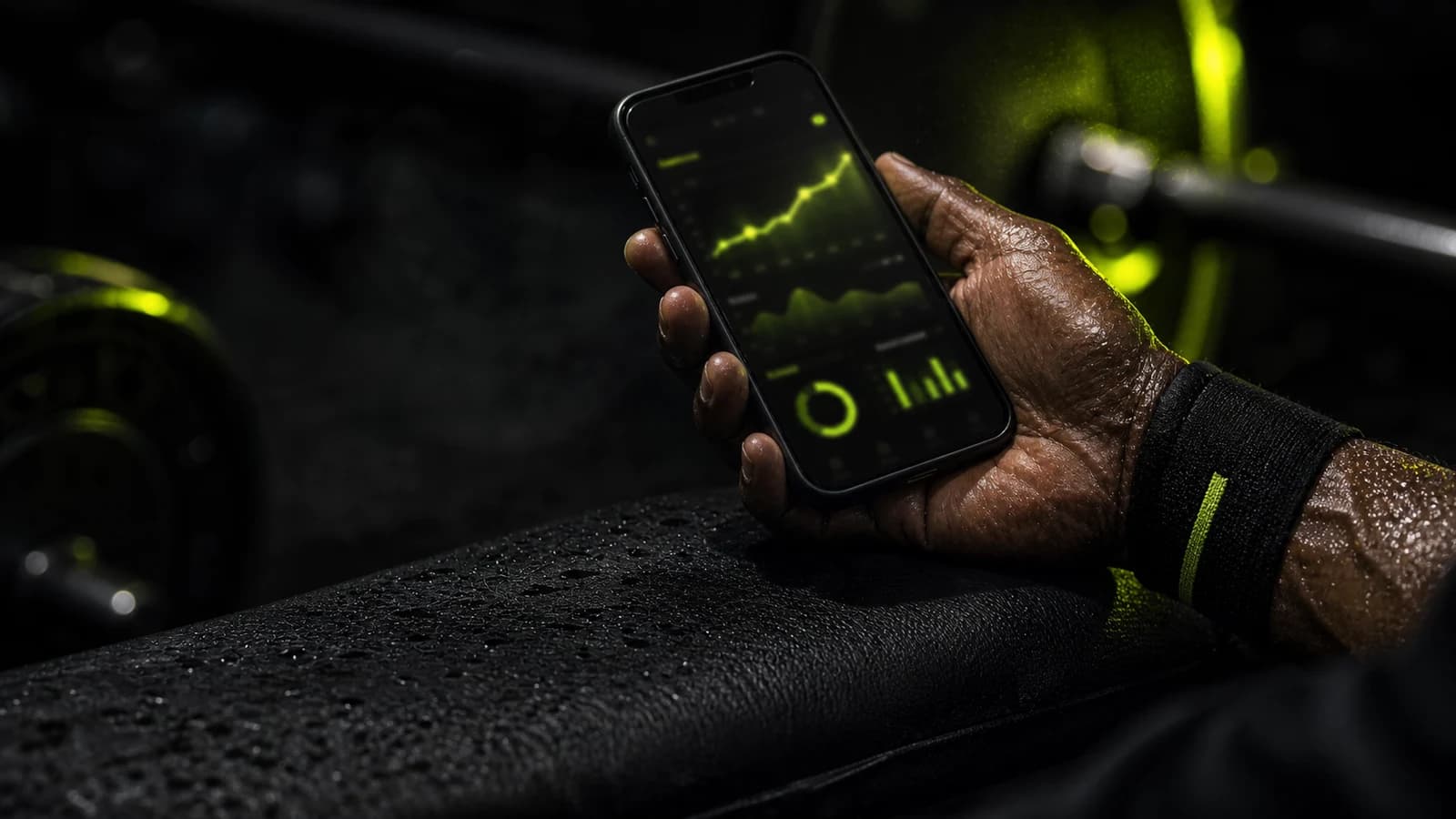
That visual, your bench press climbing from 80 kg to 92.5 kg over a block, makes the work concrete. It also makes it addictive. Seeing the line go up and to the right is the most motivating graphic in training.
The streak protects the block. Miss a session and the chain breaks. Keep showing up and the chart climbs. GainLogger tracks your workout streak, fires milestone alerts at 10, 25, and 50 sessions, and logs every PR so you can scroll back through your full strength history.
The streak you won't want to break.
Log Your PPL Sets from Your Wrist
Leaving your phone on the bench between sets is where logs fall apart. The rest timer dings, you pick up the bar, and three sets later your session has gaps.
The app runs on Apple Watch and Wear OS. Tap to start a set, tap to finish it, watch the rest timer count down on screen without unlocking your phone. The Apple Watch companion works on its own, so you can leave your phone in your bag and still capture every push, pull, and squat set.
Track Your PPL Plan the Right Way
Running Push Pull Legs requires a structured plan and a log that makes progress visible across sessions. Muscle growth depends on progressive overload, which depends on knowing what you lifted last time. Build your PPL plan once as reusable templates, share it with training partners, and watch your numbers climb week after week for free.
Start Your Push Pull Legs Program Today
The structure is simple: push, pull, legs, repeat. Six days, three movement patterns, every muscle hit twice a week. The execution, showing up regularly, logging every set, adding load over time, is what separates lifters who plateau from lifters who keep climbing.
Build your PPL template on iOS and Android. Three session types, set once, logged and tracked for every future session.
Watch your numbers climb.
FAQ
How many days a week should I do the Push Pull Legs split?
The classic PPL runs six days a week: push, pull, legs, push, pull, legs, then one full rest day. You can also run a three-day rotating cycle (push, pull, legs, repeat) if your schedule only allows three to four gym days. The key is hitting each muscle group twice per week.
Can I do Push Pull Legs five days a week?
Yes. Run push, pull, legs, push, pull, then rest. The second push cycle starts the following week. This five-day variant still hits every muscle twice weekly while giving you a midweek rest day.
How long does it take to see results from Push Pull Legs?
Most lifters notice strength gains within three to four weeks as they adapt to the volume. Visible muscle growth typically appears around week eight to twelve when progressive overload compounds across all six training days.
Is Push Pull Legs better than Upper Lower split for muscle growth?
Both splits hit every muscle twice weekly. The Journal of Sports Sciences found a 3 to 4 percent difference in muscle growth when adherence is controlled. The better split is the one you actually follow for six months in a row. Choose PPL if you can commit to six days. Choose upper/lower if four days fits your life better.
Can beginners do the Push Pull Legs split?
PPL is not ideal for beginners. Start with a full-body routine three days a week for the first three to six months. Once you have solid technique on the main lifts and consistent gym attendance, transition to PPL for faster muscle growth.
FAQ
Is PPL good for beginners? No. PPL is an intermediate program. You need at least 3-6 months of consistent gym training and solid technique on main lifts before jumping into a six-day split. Beginners should start with full-body routines three days a week.
How many days should you do PPL per week? The standard PPL runs six days a week: push, pull, legs, push, pull, legs, then rest. You can run it five or even four days by inserting rest days mid-cycle, but six days maximizes the twice-weekly frequency per muscle that drives growth.
Can you build muscle with push pull legs split? Yes. PPL hits every muscle twice a week, which research shows is near-optimal for hypertrophy. The split structure lets you maximize volume per muscle group while keeping recovery adequate between sessions.
Is upper lower or PPL better? Both hit every muscle twice a week. Upper lower runs four days; PPL runs six. If you can recover from six days, PPL gives more volume per muscle and more growth potential. If four days is your max, upper lower is the better choice because you will actually stick with it.
How long does it take to see results from PPL? Weeks one and two feel like an adaptation phase. Weeks three through six the lifts start moving. By week eight to twelve you have a full strength chart and visible changes in the mirror. PPL rewards consistency over months, not days.
Keep reading
- Push Pull Legs Split: The 6-Day Plan for Maximum Muscle Growth
- Upper Lower Split: The 4-Day Workout Plan That Works
- Superset Workout Plan: Build More Muscle in 30 Minutes or Less
Start tracking your workouts today
Available for free on iOS and Android.